Building & Installation
How Long Does It Take to Build a Pizza Oven?
Survey to first pizza, stage by stage — what each stage actually involves, what makes a build run long, and why the curing week at the end is not padding you can negotiate away.
Three to five weeks from deposit to first pizza, for a commercial site build. Most of that is not what people expect, and the stage clients most want to compress is the one we will not.
Stage by stage
Survey and specification — 2 to 5 days
A site visit covering floor loading, flue route, clearance to combustibles, working space, and how the oven will actually be used. Out of that comes a written specification and a real quote. Nothing is ordered until you have agreed it.
This is also where we push back if the size you asked for is wrong for your throughput. Better an awkward conversation now than an oven you regret.
Materials and preparation — 5 to 10 days
Refractory brick, castable, ceramic fibre, rockwool, and flue components assembled. We hold most of this in stock rather than sourcing per job, which is faster and means the specification does not shift according to what a supplier happened to have that week.
Base and stand — 1 to 2 days
Structural base or steel stand, plus any reinforcement the survey identified. If the survey found the floor will not carry the load, that structural work is a separate job that happens before we arrive.
Hearth and dome — 3 to 5 days
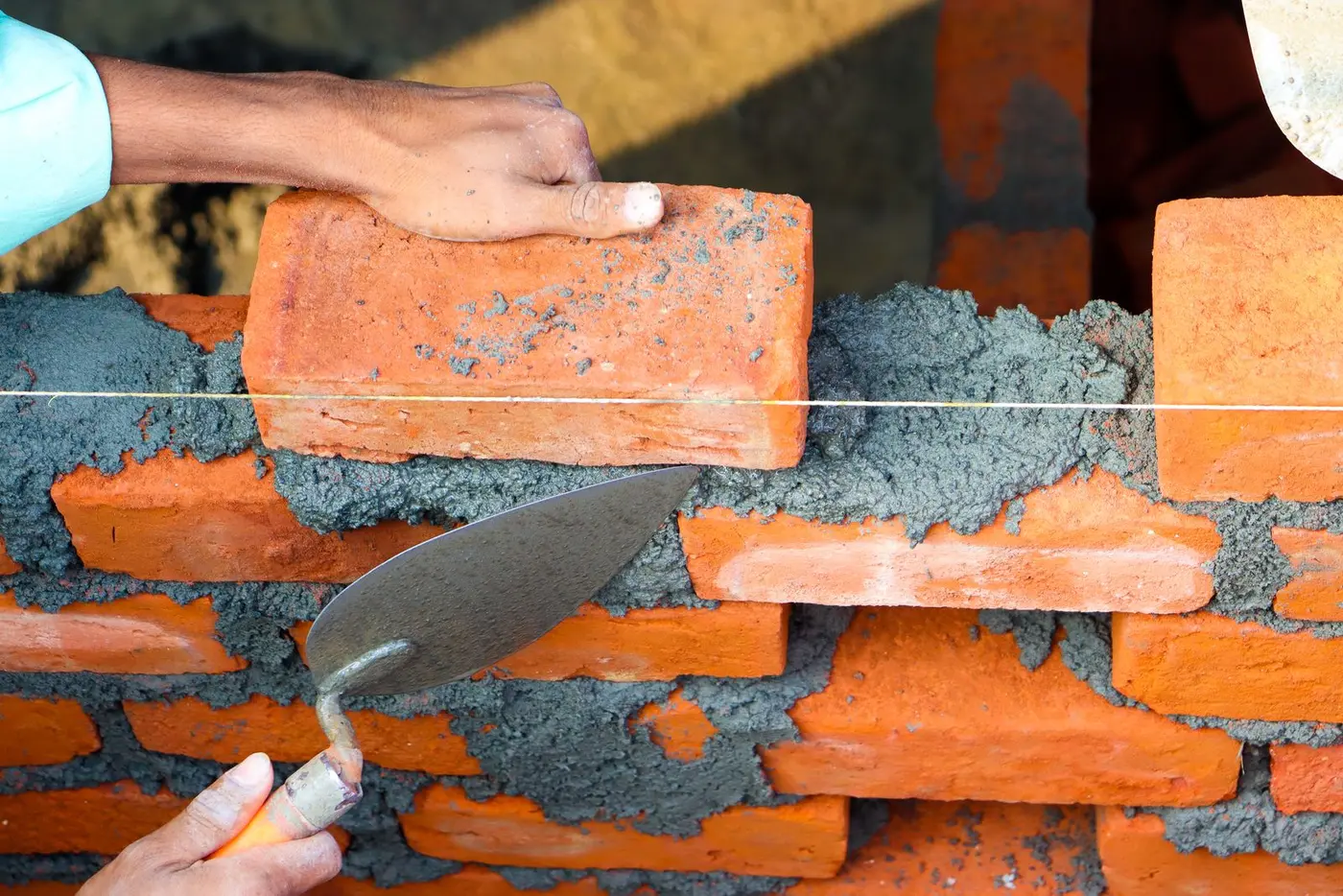
Calcium silicate base board, then the high-alumina hearth laid dry, then the dome raised course by course in cut firebrick bedded in refractory castable.
This is the skilled work and it sets everything the oven will ever do. The dome profile determines whether radiant heat returns to the floor properly; get it wrong and no amount of fuel will produce a 90-second bake.
Insulation and flue — 1 to 2 days
Ceramic fibre against the dome, rockwool over it, then the flue installed, fire-stopped where it passes through structure, flashed, and terminated above the roofline.
Finish — 2 to 7 days
Render is quick. Tadelakt, mosaic, or stone cladding is where this stretches — occasionally longer than the oven itself took.
Curing — 6 days minimum
Non-negotiable. Small fires rising gently so bound water leaves the structure at a rate it can tolerate. Larger and heavier ovens need longer; our 130 cm bakery build takes a full three days at the low end alone.
Handover — half a day
Fired to working temperature with you present, a walkthrough of firing and management, and a maintenance briefing. You should not take delivery of an oven nobody has run hot.
Why curing cannot be compressed
This is the stage clients most often ask us to shorten, usually because an opening date is fixed and everything else has slipped. We will not do it.
A new oven holds a great deal of water — in the castable, absorbed into the brick, and in the render. Fired hard before that water has left, it turns to steam inside the structure faster than it can escape. Steam expands roughly 1,600 times. The result is spalled hearth brick, cracked castable, or a dome that has to be rebuilt.
Six days of patience protects something meant to last decades. The full schedule is in our first-fire guide.
If your opening date is tight, tell us at survey. We can often start earlier, or run the finish work in parallel with the early curing fires. The curing week itself stays.
What makes a build take longer
- Structural work. If the floor needs reinforcing, that is a separate trade with its own lead time before we can start.
- Difficult flue routing. Multi-storey runs, fire-stopping at each floor, and roof flashing add days. See flue and siting.
- Elaborate finishes. Hand-laid mosaic is slow, skilled work.
- Working around trading. Building in a kitchen that is still open means shorter working days and more setting up and clearing away.
- Weather. Outdoor builds lose days in the rains, and render will not cure properly wet.
- Decisions outstanding. A finish not chosen, or a position not confirmed, stops work as effectively as bad weather.
Faster routes
A finished oven delivered on a stand cuts site time to a day or two, because the build and the curing happen in our workshop while you carry on trading. It works where access allows — realistically ground floor, vehicle access, and under about 110 cm. Our guide to buying finished versus building on site has the access checklist.
For domestic garden ovens the whole process is usually two to three weeks, since the flue is simpler and there is rarely structural work.
Planning around an opening date
Work backwards and add a fortnight of slack. Ovens are not usually what delays a restaurant opening, but they are one of the few elements with a hard, physically-imposed minimum duration that no amount of money compresses.
If you are fitting out a new site, the useful sequence is: confirm the oven position and flue route early, before other services are routed. Retrofitting a flue path around ductwork someone else installed first is a recurring and entirely avoidable expense.
Talk to us at the drawings stage through design and consultation and it costs nothing to get right.
What we need from you, and when
Builds slip more often on decisions than on weather. The ones that hold us up:
- Final position, confirmed. Not "roughly there" — the exact footprint, agreed on site. Moving it after the base is laid means starting again.
- Finish chosen. Render, tadelakt, mosaic, stone, or stainless. This determines the last week of the programme and the material order.
- Access arrangements. Who lets us in, when, and whether we can work through your service hours.
- Structural work completed, if the survey called for it.
Decisions outstanding stop work as effectively as rain does, and they are the one category entirely within your control.
Building in a trading kitchen
Most of our commercial work happens around live service. It is normal and manageable, but it changes the arithmetic: shorter working days, time lost setting up and clearing away each session, and dust protection that has to go up and come down daily.
Expect a build in a trading kitchen to take roughly 30% longer than the same oven in an empty shell. If you can give us a closed week, we will finish materially faster and you will pay less for it.
A realistic programme
For a 100 cm commercial dome, ground floor, rendered finish, no structural work, in a kitchen trading five days a week:
- Week 1 — survey, specification agreed, materials assembled.
- Week 2 — base and stand, hearth laid, dome raised.
- Week 3 — insulation, flue, render.
- Week 4 — curing fires, daily, rising.
- End of week 4 — fired to temperature, handover, first pizza.
Add a week for an elaborate finish, two for structural work, and one for a difficult flue route.