Building & Installation
Refractory Castable vs Mortar
What holds a dome together, why ordinary cement fails at oven temperatures, and how to tell whether the oven you are being quoted uses the right binder.
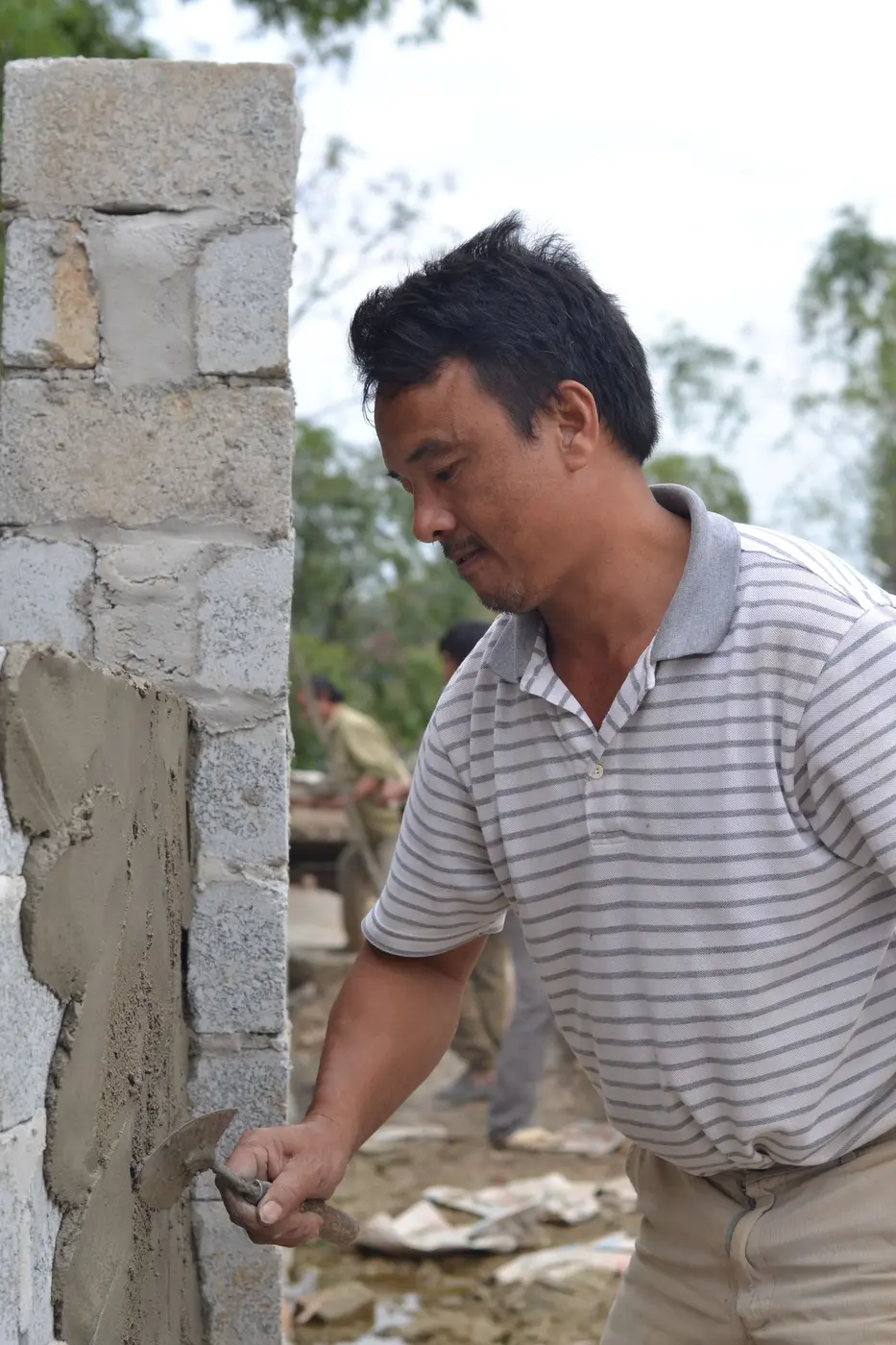
The brick gets the attention. What holds it together decides whether the dome is still sound in ten years.
This is a short subject with one important conclusion, so here it is up front: ordinary Portland cement does not belong in the hot structure of a brick oven, and it is used there more often than it should be.
Why ordinary cement fails
Portland cement gains its strength from hydration — chemically bound water within the set matrix. Take it above roughly 300 °C and that bound water is progressively driven off. The matrix loses strength, then integrity.
A pizza oven dome runs far beyond that. The failure is not dramatic and it is not immediate, which is exactly the problem. The oven works. It works for a season, maybe two. Then joints start crumbling, the dome develops movement, and repairs become continuous.
By the time it is obviously wrong the builder is a memory and the cost is yours.
What refractory castable is
A cement formulated with calcium aluminate binders and refractory aggregate instead of ordinary Portland chemistry. It is designed to keep its strength at sustained high temperature rather than lose it.
It also behaves better under thermal cycling — the constant expansion and contraction of heating and cooling that a working oven does hundreds of times a year.
It costs more per bag. It is a small fraction of the total build, and it is not a sensible place to save.
Castable and mortar are different jobs
Worth separating two uses that get conflated:
- Refractory mortar — a thin jointing material for bedding brick against brick. Thin joints, high temperature, minimal shrinkage.
- Refractory castable — a pourable or trowellable material used in thicker sections, for forming shapes, filling voids, and creating monolithic elements.
A dome build typically uses both: mortar between cut brick, castable where the geometry demands a formed section. Both are refractory-grade. Neither is builder's cement.
Where ordinary cement is fine
Outside the hot zone, ordinary cement is entirely appropriate and we use it. The stand, the outer render, the plinth — none of these see oven temperatures, because that is what the insulation layers are for.
So a quote that mentions cement is not automatically wrong. What matters is where. Ask specifically what binds the dome and what beds the hearth.
Curing is part of the specification
Refractory castable does not simply dry. It cures chemically, and then it has to be dried in a controlled way — which is exactly what the first-fire schedule does.
Fired hard while still wet, the trapped water flashes to steam inside the castable and blows sections off the face. This is why the curing week is not optional and why a builder who skips it has undone the benefit of using the correct material in the first place.
Signs the wrong binder was used
On an existing oven:
- Crumbling or powdery joints in the dome, particularly near the mouth where temperatures cycle hardest.
- Progressive rather than stable cracking — a crack that grows season by season rather than appearing once and staying put.
- Grey, sandy debris on the hearth after firing, distinct from ash.
- Movement in the dome, particularly bricks that can be rocked slightly.
Any of these is worth having looked at. Caught early it is a reline; left, it becomes a rebuild.
What to ask
Two questions, and they are easy to ask without any technical background:
- "What binds the dome — is it refractory castable or ordinary cement?"
- "What beds the hearth brick?"
A builder working properly answers immediately and specifically. Hesitation, or a general reassurance that "it's all high-temperature", is worth pressing on.
What we use
Refractory castable and refractory mortar throughout the hot structure, from stock we hold ourselves. Ordinary cement only outside the insulation, where it belongs.
It is the same material we supply to industrial clients for furnace and kiln linings, which is a considerably harsher application than a pizza oven — see what goes into a brick oven for how it sits in the whole build.
Mixing and placing
Refractory castable is less forgiving than ordinary cement. Water content matters — too much and you lose strength permanently, too little and it will not place properly. It also has a working time that does not negotiate, so it is mixed in batches sized to what can be placed before it goes off.
This is one of the practical reasons a first-time self-builder struggles even with correct materials: the material behaves differently from anything in general construction, and the mistakes are not visible until the oven is fired.
Joint thickness
Refractory mortar wants thin joints — brick-to-brick contact with the mortar filling the gap, not brick floating in a bed of it. Thick joints shrink more, crack sooner, and conduct heat differently from the brick around them.
Wide, irregular joints packed with material are a reliable sign of poor cutting upstream. The mortar is being asked to compensate for brickwork that does not close properly, and it will fail where the brick should have met.
Repairing failed joints
Localised joint failure can often be raked out and repointed with fresh refractory mortar rather than rebuilding. It works when the surrounding brick is sound and the failure is limited — typically near the mouth, where cycling is hardest.
It does not work where the binder has failed throughout, because you would be repointing indefinitely. That is the distinction we draw at a reline survey: localised repair against systemic replacement.
A note on self-build guidance online
A great deal of published oven guidance, particularly from other climates, specifies materials by trade names that do not exist in Kenya or by generic descriptions that map onto several different products here.
Buy on the property rather than the name: a calcium-aluminate-bound castable with a stated service temperature, and a refractory mortar rated for the same. If a supplier cannot tell you the binder chemistry, assume it is ordinary cement.