Building & Installation
Fire Bricks for Pizza Ovens, Explained
High-alumina, fireclay, insulating firebrick and ordinary building brick compared — what each is for, what happens when the wrong one is used, and why the hearth is laid dry.
"Fire brick" is not one product. It is a family, and the differences between members are the difference between a hearth that lasts fifteen years and one that starts breaking up in the second season.
Brillian supplies refractory brick to industrial clients as well as using it in our own ovens, so this is a distinction we deal with daily.
High-alumina firebrick
What we use for the cooking floor and the dome. Alumina content is high, which buys three things that matter in an oven:
- Thermal shock resistance. Cold dough lands on 480 °C brick many times a night. The brick has to absorb that repeatedly without cracking.
- Abrasion resistance. A steel peel scraping across the floor thousands of times a year.
- Sustained service temperature. Comfortably beyond anything a pizza oven will reach, with margin.
It is the most expensive of the sensible options and the correct one for a floor you intend to keep.
Fireclay brick
Lower alumina, lower cost, and genuinely useful — in the right place. Fireclay handles heat well but is less resistant to thermal shock and abrasion than high-alumina.
It is reasonable in parts of the structure that get hot but are not being scraped or shocked, and it is a common component in domestic builds where the duty cycle is light. Putting it in the hearth of a commercial oven is a false economy: it will not fail immediately, which is precisely what makes it tempting.
Insulating firebrick
A different animal entirely. Lightweight, highly porous, excellent insulator, and mechanically weak. It is for insulating, not for building the structure you cook on — you can often mark it with a fingernail.
It appears in some oven builds as a backing layer. It should never appear as a cooking floor, and if you are shown a hearth of lightweight, chalky-looking brick, ask directly what it is.
Ordinary building brick
The one that causes the damage. Common clay brick is not made for this. Under direct flame and thermal cycling it spalls — fragments flake off the face — and then it crumbles.
Worse, it usually fails gradually enough that the builder is long gone. The oven works for a season, then the floor starts shedding, and by then the cost of stripping and relining exceeds what the "saving" was.
If a quote is markedly cheaper than the others, this is one of the places to look. Our hiring checklist has the question to ask.
Why the hearth is laid dry
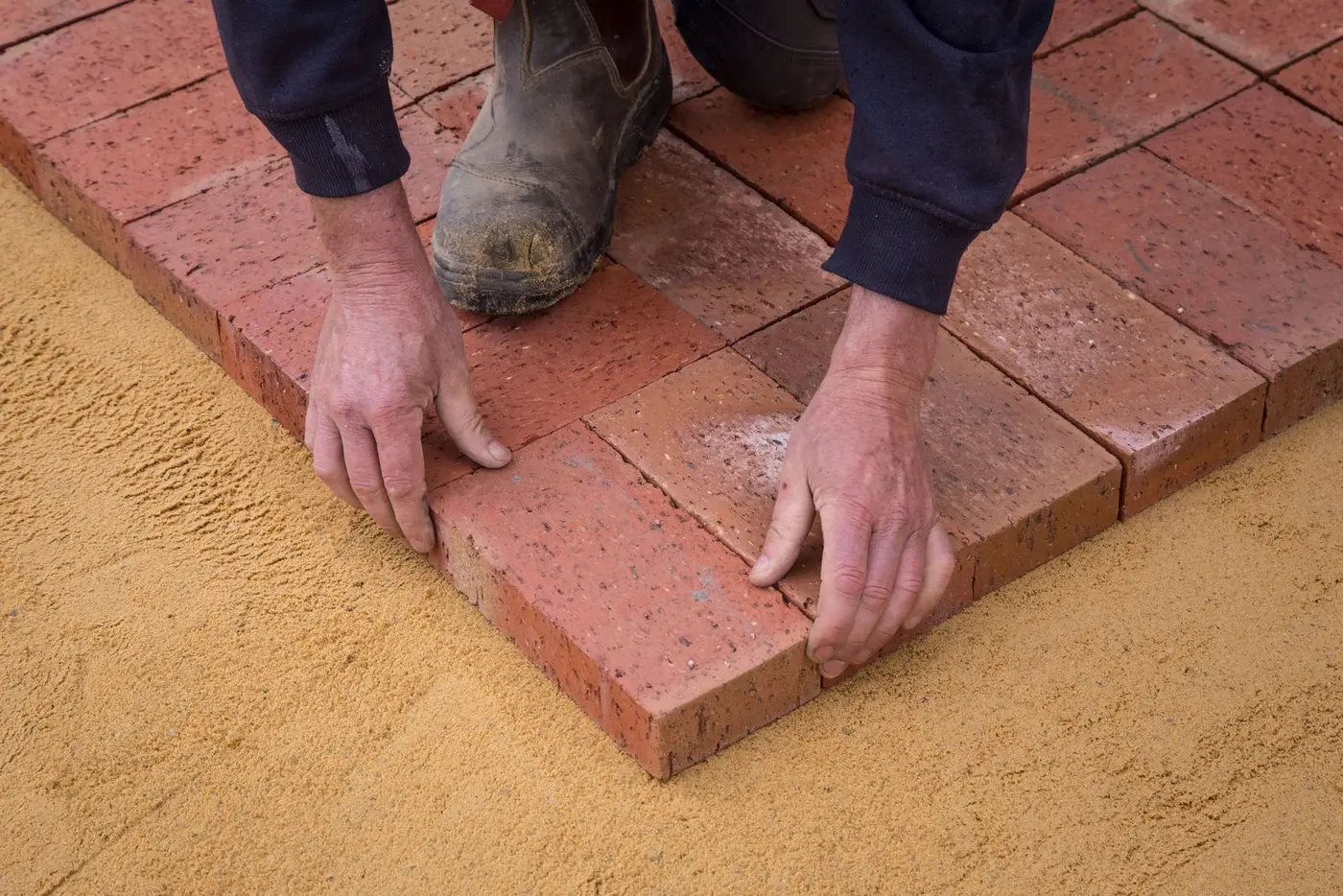
We lay cooking-floor brick dry — butted tightly, no mortar between tiles. Three reasons:
- Replaceability. After years of peel wear, individual tiles lift out and swap. On a mortared floor the same job means breaking out the floor and often disturbing the dome above.
- Thermal movement. Brick expands and contracts through every firing cycle. Dry-laid tiles accommodate that. Mortar joints in the floor are a place for cracks to start.
- Flatness. A dry-laid floor bedded properly on a level base is flatter than a mortared one, and a flat floor is what lets a peel slide under a pizza cleanly.
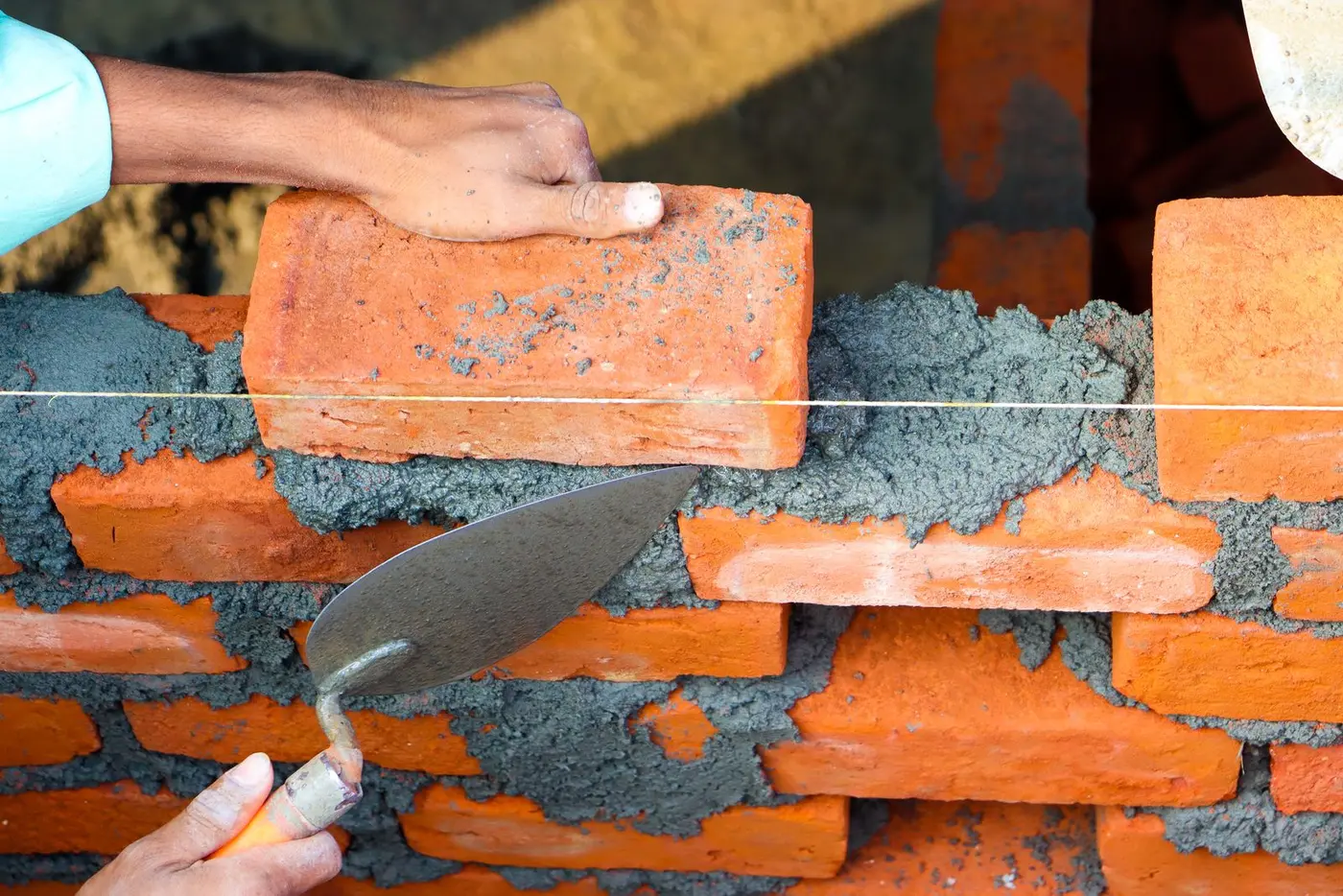
The dome is different — that is bedded, in refractory castable, because it has to hold itself up.
Thickness
Our standard hearth is 65 mm. Our bakery build uses 100 mm, because bread wants more mass and a gentler falling curve rather than fast recovery.
Thicker is not simply better. More mass takes longer to heat and costs more fuel to get there. It is a deliberate trade against what the oven is for.
How to inspect brick you are being sold
- Weight. Dense refractory feels noticeably heavy for its size. Lightweight and chalky means insulating brick.
- Sound. Tap two together — dense refractory rings, ordinary brick thuds.
- Face condition. Look for existing hairline cracks or chipped arrises. These get worse, not better.
- Consistency. Bricks from one batch should match in colour and dimension. A mixed pallet means mixed sources and mixed properties.
- Ask for the specification. A genuine supplier can tell you the alumina content and service temperature. A trader reselling whatever arrived cannot.
What we use and why we can say so
High-alumina firebrick, 65 mm, laid dry on a calcium silicate base, in every oven we build. It comes from stock we hold rather than being sourced per job, which is why the specification does not shift between one of our ovens and the next.
If you are repairing an oven someone else built and are unsure what is in it, we can look. That is routine work under relining and repair.
Reading a refractory specification
If a supplier gives you a data sheet, three figures carry most of the meaning:
- Alumina content (%). Higher generally means better thermal shock and abrasion resistance. High-alumina brick for oven duty typically sits well above the fireclay range.
- Maximum service temperature. Should exceed your working temperature with genuine margin, not sit just above it.
- Cold crushing strength. A proxy for how the brick will take mechanical abuse — peel abrasion, dropped trays, and the weight of the dome above.
If a supplier cannot provide any of these, they are trading rather than supplying, and you are buying on appearance.
Why we do not use insulating firebrick in the hearth
It comes up because insulating firebrick is an excellent insulator and people reasonably assume more insulation is better. But it is mechanically weak — you can often score it with a fingernail — and a cooking floor takes a steel peel thousands of times a year.
Insulation belongs above and around the dome, in ceramic fibre and rockwool, where it is protected. The floor needs to be dense and hard. Confusing the two roles produces an oven that insulates beautifully and disintegrates under use.
Cutting and laying
Dome bricks are cut to angle so each course closes properly. That cutting is skilled work and it is where a badly built dome reveals itself — wide, irregular joints packed with castable rather than tight brick-to-brick contact.
Thick joints are weak points. They crack first, they carry heat differently from the brick around them, and they are the reason some domes develop a pattern of failure that follows the mortar lines. If you visit during construction, look at the joints.
Sourcing in Kenya
Refractory supply here is variable, and the same nominal product can differ between batches and importers. We hold stock rather than buying per job specifically to avoid that — it is why the specification of one of our ovens matches the next.
If you are sourcing independently, buy the whole quantity in one batch. A dome built from two different brick types will behave inconsistently under thermal cycling.