
Industry
Homes & Private Residences
Garden and patio ovens built on site, sized for family cooking rather than service.
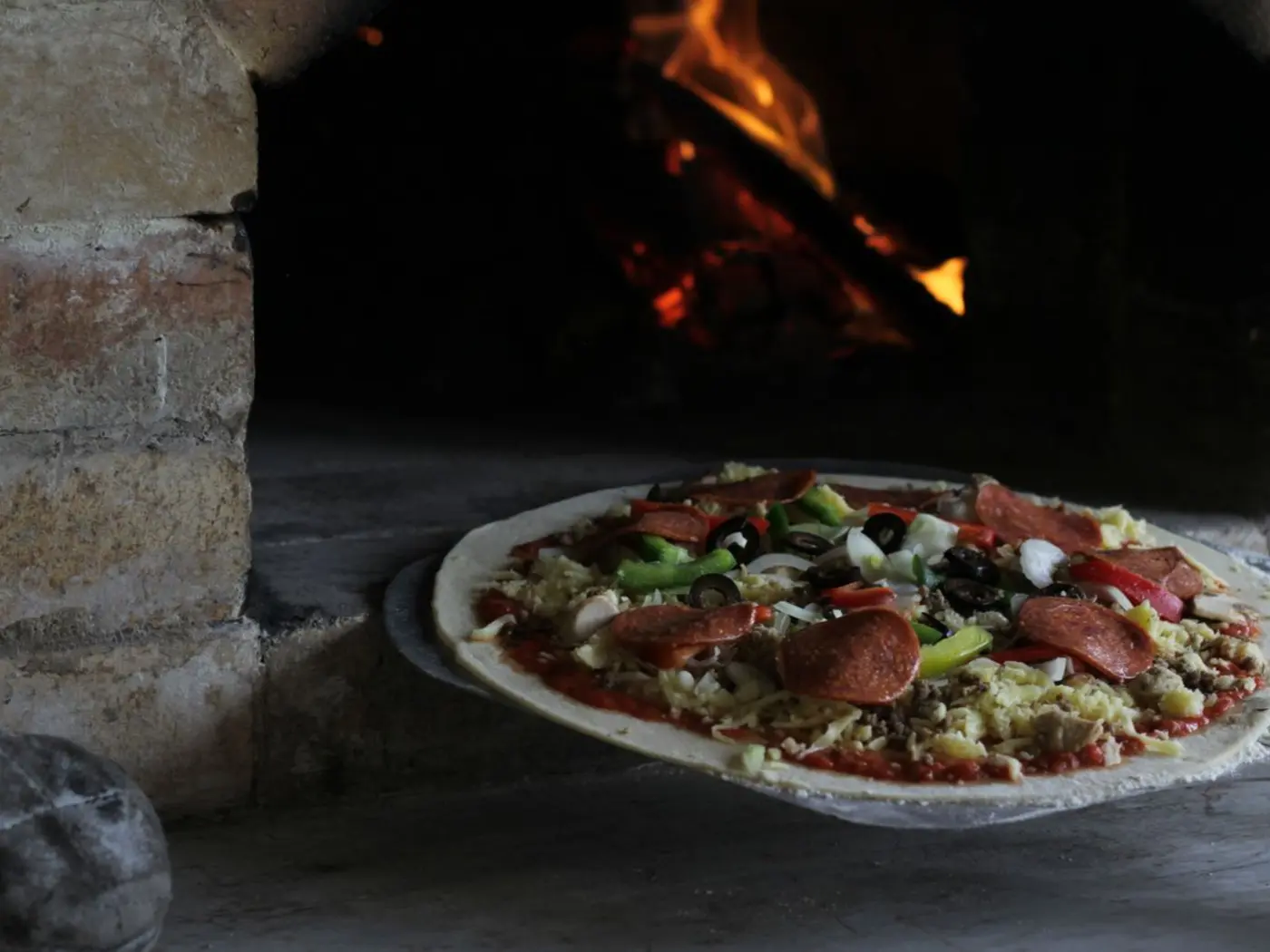
A domestic oven is a weekend oven. It is fired from cold, cooks for a dozen people over an afternoon, and then sits until next time. That is a different job from a restaurant oven and it argues for a different build.
Sized for an afternoon, not a service
At 90 cm a dome reaches working temperature in around an hour rather than the 90 to 120 minutes a commercial oven takes, on noticeably less wood. It still holds three twelve-inch pizzas and still runs the same 60 to 90 second bake.
Buying a commercial oven for a garden is a waste — more mass to heat, longer to get there, more fuel for a Saturday that a smaller oven handles comfortably. We will tell you that rather than sell you the larger one. The 90 cm build is the right answer for most households.
Full specification, less mass
What comes down is the size, not the quality. High-alumina hearth, firebrick dome in refractory castable, ceramic fibre and rockwool insulation — the same layers as our commercial builds, because the things that make an oven hold heat do not become optional at domestic scale.
What each layer does is worth reading before you compare quotes, since none of it is visible once the render is on.
Built into the garden
An oven built into an existing wall, boma, or outdoor kitchen reads as part of the structure rather than equipment that arrived on a pallet. It also shares the masonry, which usually makes it cheaper than a free-standing build on its own stand.
We check the wall can carry the load and that the flue route and clearance to anything combustible work. That is part of the survey, which is free across Kenya.
Cooking beyond pizza
Pizza uses the top of the heat curve for twenty minutes. Everything below it — roasts, slow-cooked meat, vegetables, bread the next morning — runs on heat you have already paid for. A well-planned firing gets three meals out of one load of wood, and that is where a domestic oven stops being an indulgence.
Firing it properly
We run the full curing schedule before handover and walk you through firing, managing, and reading the oven — including the soot-clearing indicator that tells you when it is up to temperature without any instrument.
We also cover what to burn, which matters more than most new owners expect: wet wood roughly doubles consumption and sooties the dome.