
Service
Oven Design & Consultation
Sizing, siting, and extraction worked out before anyone orders brick.
Quote within 24 hours
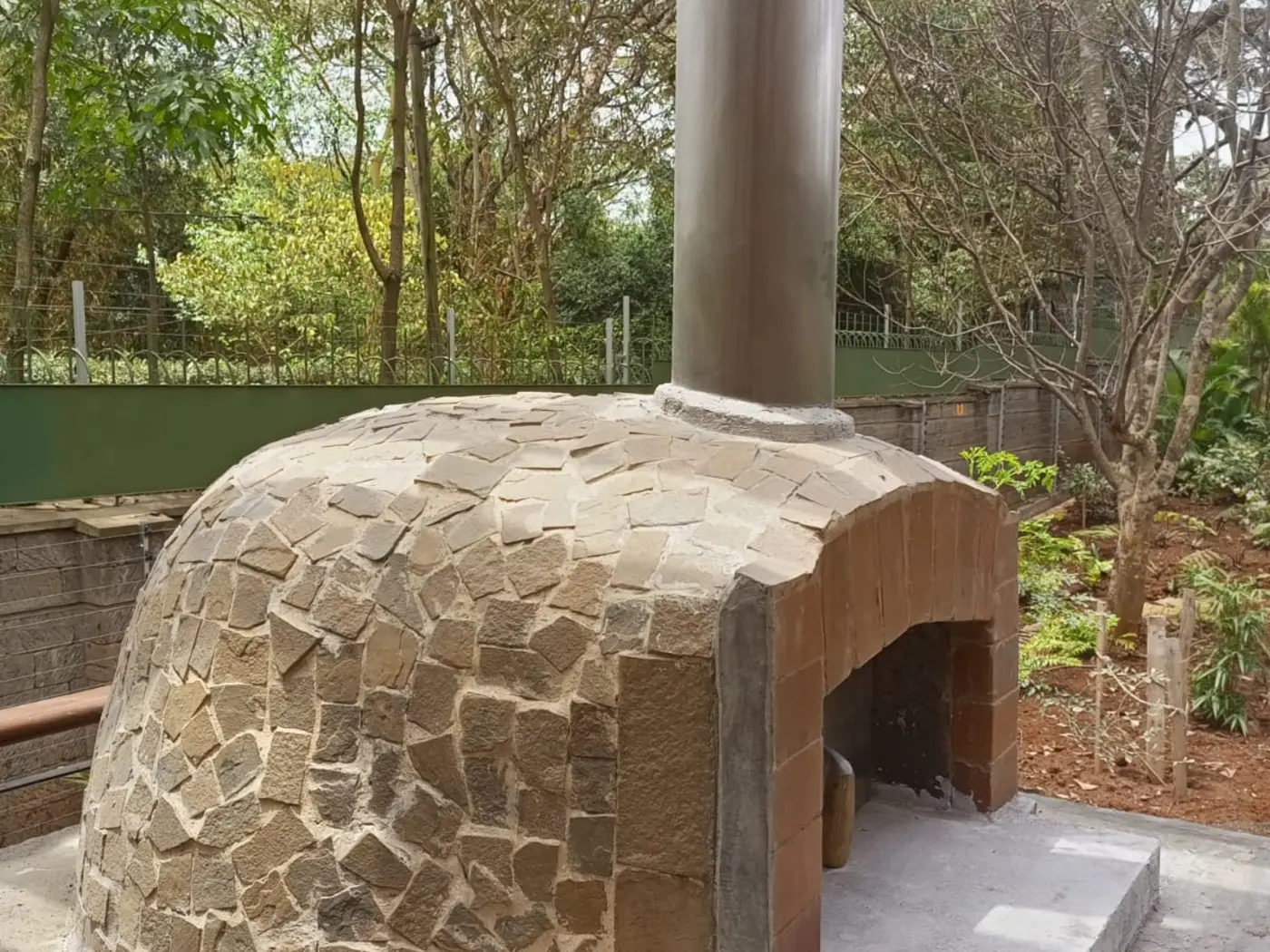
The expensive mistakes happen before construction. An oven sized for the wrong throughput, a flue that cannot be routed, a floor that will not carry the load, or a dome placed where the extraction hood cannot capture it. All of them are cheap to avoid at the drawings stage and costly to fix afterwards.
What we work out with you
Size, from your peak hour
Not from daily covers, and not from the oven you saw in Italy. What matters is the busiest single hour you have to serve, because that is the only time the oven is the bottleneck. A 100 cm dome turns 40 to 50 pizzas an hour with one operator; a 120 cm turns 70 to 80 but takes twice as long to heat and burns materially more fuel.
We work backwards from your covers and tell you honestly when the smaller oven is the better buy. The sizing method is published in full.
Fuel
Wood, gas, or hybrid is decided by how you trade rather than by preference. Long hours and rotating shifts favour gas. A menu built on Neapolitan pizza favours wood. Genuinely different weekday and weekend patterns can justify a hybrid — but only if both patterns are real, and we will say so if they are not. The comparison is here.
Position and structure
An oven concentrates one to two and a half tonnes into a couple of square metres. On a ground-floor slab that is usually fine; on a suspended floor it may need reinforcement first. We check the loading rather than assuming it, along with working space in front of the mouth and a route for fuel that does not cross your service line.
Extraction
More ovens disappoint because of the flue than because of the oven. We establish that a viable route to above the roofline exists, at the right diameter for the fuel, with the clearances a building inspector and an insurer will both want to see. Why draw fails, and how it is sized.
The decision that cannot be reversed
If there is any chance of running wood later, the flue has to be sized for wood now. A larger flue on a gas oven is a minor inefficiency. Retrofitting a 250 mm flue into a building piped for 150 mm means opening up structure, redoing fire-stopping and flashing, and sometimes discovering there is no viable route at all.
It costs nothing to get right at survey and it is the single most common regret we encounter. Which is the entire argument for having this conversation before anything is ordered.
Working from drawings
If you are fitting out a new site, talk to us at the drawings stage. The useful sequence is to fix the oven position and flue route before other services are routed — retrofitting a flue path around ductwork someone else installed first is a recurring and entirely avoidable expense.
We are happy to mark up architects' drawings and to talk directly to your contractor.
What you get
- A site visit, free across Kenya.
- Floor loading, flue route and clearance assessment.
- A recommended oven size and fuel, with the reasoning.
- A written specification covering every layer of the build.
- A realistic cost against your actual site, within 24 hours.
- An honest answer about whether a finished unit or a site build suits you better.
Including when the answer is no
Sometimes the survey concludes that the position you wanted will not work, that the floor needs structural work first, or that a smaller oven than you had in mind is the right one. We would rather have that conversation before you have committed than explain it afterwards.
Occasionally the honest answer is that a finished unit suits you better than a build, or that your trade does not justify the oven you were considering. We will say that too.
Also from Brillian
- 01
On-Site Oven Construction
We build the oven where it will stand — dome, hearth, insulation, flue, and finish.
- 02
Refractory Relining & Repair
Cracked domes, spalled hearths, and failed castable brought back to service.
- 03
Oven Servicing & Maintenance
Scheduled inspection, flue cleaning, and burner servicing to keep an oven in service.
- 04
Flue & Extraction Installation
Insulated flue systems and hood integration that meet draw and clearance requirements.