
Service
Oven Servicing & Maintenance
Scheduled inspection, flue cleaning, and burner servicing to keep an oven in service.
Quote within 24 hours
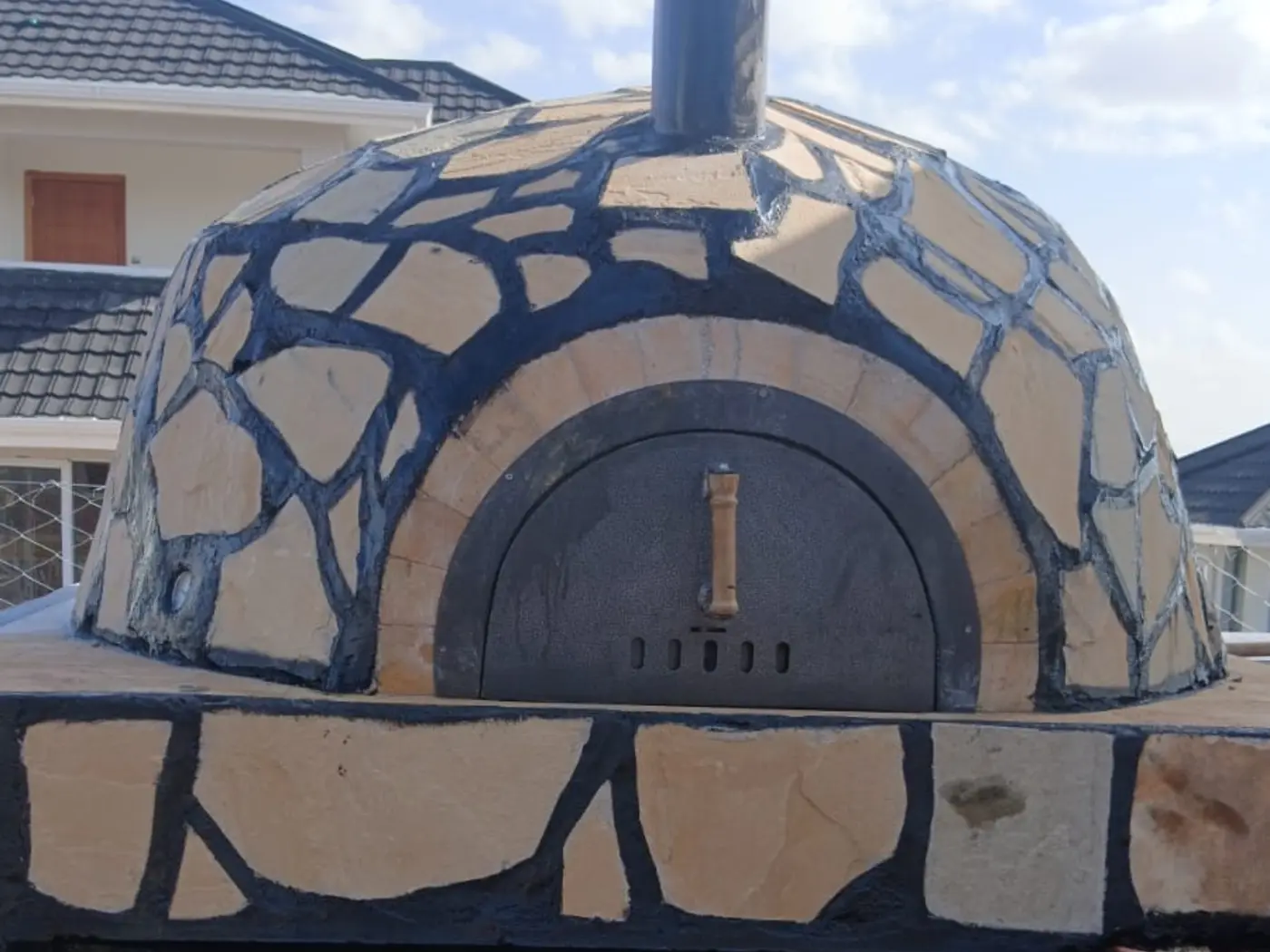
A commercial oven earning its keep should be looked at annually, more often for a seven-day pizzeria. Kitchens on a schedule lose far less trading time than those that call when the oven has already stopped.
What an annual service covers
- Flue sweep and draw check. Creosote accumulates in any wood-fired flue and it burns. This is the item that is genuinely urgent rather than merely advisable.
- Refractory inspection. Dome, hearth, mouth arch, and the dome-to-hearth junction, cold and properly lit. We are looking for growth in existing cracks, new spalling, and movement.
- Hearth tile assessment. Individual worn tiles are cheap to replace on schedule and expensive to ignore.
- Insulation check where accessible, particularly where heat retention has declined.
- Burner service on gas ovens — tuning, flame-failure device test, and the certification your insurer will ask for.
- Render and cladding made good before water gets in.
Why the flue sweep is not optional
Creosote is a tar deposit left by wood smoke, and it is flammable. A chimney fire in a commercial kitchen is a serious event, and it is one your insurer will ask about afterwards — including whether the flue had been swept and when.
Annually for most operations. Twice yearly for seven-day wood service, and more often if the oven has been run on anything less than properly seasoned wood, which produces creosote considerably faster.
What you can do between visits
Most maintenance is daily habit rather than intervention. Brush the hearth while it is warm, with brass or natural bristle — never wire, which scores the surface and embeds steel that later rusts. Clear ash into a metal container. Close the door at shutdown, which retains heat overnight and cuts the next firing significantly.
And never use water on a hot hearth. It is the commonest self-inflicted damage there is: thermal shock cracks brick, and the moisture then has to come back out of the structure. The full daily-to-annual schedule is published here.
The symptoms worth calling us about
Sometimes the oven tells you before anything is visible:
- It takes noticeably longer to reach temperature than it used to.
- It will not hold temperature through a service it used to manage comfortably.
- Fuel consumption has climbed with no change in trade or wood supply.
- The outside is hotter to the touch than it was.
- It is cold the next morning when it used to be warm.
Any two of those together usually mean insulation has been compromised, commonly by water. The dome is often entirely sound and the fix is far cheaper than the fuel being wasted.
Keeping a log
A single page by the oven — date, what was done, anything noticed — is enough. It tells you when the flue was last swept, gives a new manager the history, and turns "the oven seems slower lately" into something with a date attached.
It also makes an insurance conversation considerably easier, and it is often the difference between catching a problem as a reline and discovering it as a rebuild.
Ovens we did not build
We service ovens regardless of who built them. If the builder is no longer around, or you have taken over premises with an oven already in place and no history, that is a common situation and not a problem.
Across Kenya, with scheduled visits into Uganda and Tanzania coordinated with other work in those markets.
Also from Brillian
- 01
On-Site Oven Construction
We build the oven where it will stand — dome, hearth, insulation, flue, and finish.
- 02
Oven Design & Consultation
Sizing, siting, and extraction worked out before anyone orders brick.
- 03
Refractory Relining & Repair
Cracked domes, spalled hearths, and failed castable brought back to service.
- 04
Flue & Extraction Installation
Insulated flue systems and hood integration that meet draw and clearance requirements.