Buying Guides
How Much Does a Pizza Oven Cost in Kenya?
Nobody in this market publishes prices. Here is what actually drives the cost of a brick oven in Kenya, why quotes for the same dome diameter vary by a factor of three, and where the money is genuinely worth spending.
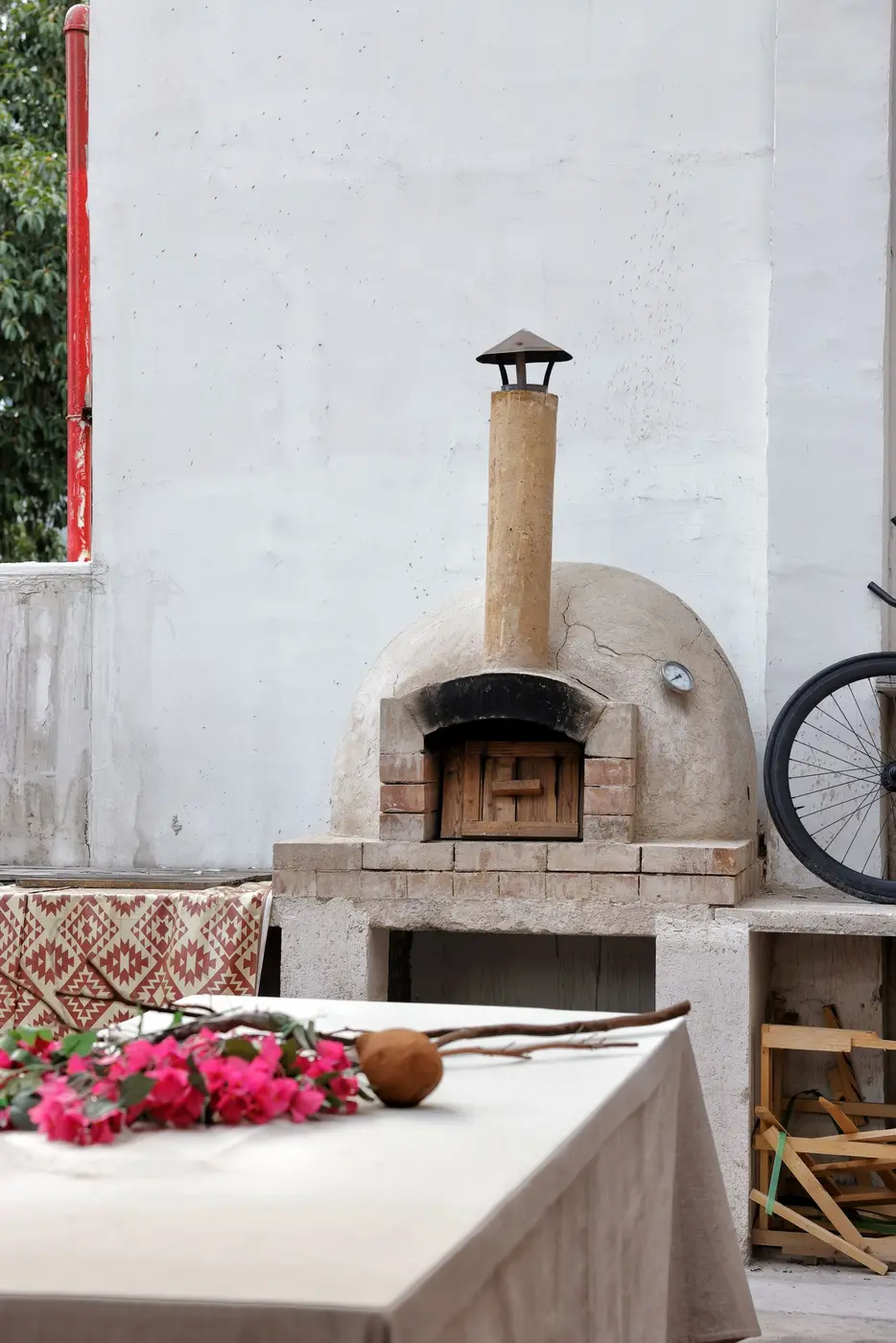
Search for pizza oven prices in Kenya and you will find almost nothing. Every supplier — ourselves included, until this article — asks you to get in touch. There are honest reasons for that. No two ovens are the same, and a real quote depends on a site survey. But the effect is that buyers cannot budget, cannot compare, and cannot tell whether a number they have been given is reasonable.
So here is the version we would want if we were buying: what actually drives the cost, why two quotes for "a 100 cm oven" can differ by a factor of three, and which parts of the build are worth paying for.
Why nobody publishes a price
A brick oven is not a product off a shelf. The same 100 cm dome varies enormously depending on whether it is built on site or delivered finished, what the outer finish is, how far the flue has to run, and whether the floor needs reinforcing before anything is laid. A single published figure would be wrong for most enquiries, and the supplier would spend every conversation explaining why.
That is a real problem. It is not a reason to tell you nothing.
The five things that actually move the price
1. Dome diameter
The biggest single factor, because everything scales with it: brick count, castable volume, insulation area, flue diameter, and days of skilled labour. Going from a 90 cm garden oven to a 120 cm commercial dome roughly doubles the materials and more than doubles the labour.
It is also where most people overspend. A 120 cm dome earns its cost if your peak hour genuinely needs 70 or more pizzas. If it does not, you are paying to build — and then paying every week to heat — mass you will never use. Our sizing guide works through the arithmetic properly.
2. Site build versus finished unit
A finished oven is built in a workshop, cured there, and delivered complete. That is efficient and usually cheaper — until access defeats it. If the oven cannot be craned or wheeled into position, it has to be built in place, which means five to nine days of skilled labour on your premises instead of in our yard.
Anything above about 110 cm is nearly always a site build, because a finished dome at that size approaches two tonnes. We cover the trade-off in buy finished or build on site.
3. The outer finish
The oven inside the render is identical whether the outside is plain cement or hand-laid mosaic. But finishes vary enormously in labour: a rendered dome might be two days of work, tadelakt or detailed mosaic a week or more.
This is the easiest place to control budget, and the one people most often get wrong in both directions. If the oven lives in a back kitchen where only staff see it, render it. Save the expensive finish for ovens that face customers, where it is doing marketing work as well as cooking.
4. Flue length and routing
A ground-floor oven with a short vertical flue straight out through a roof is straightforward. A first-floor kitchen needing eight metres of insulated twin-wall flue routed around structure, fire-stopped at every floor penetration, and flashed through a tiled roof is a different job — and insulated twin-wall is not cheap per metre.
Get the flue route surveyed before you commit to a location. It is the single most common reason a quote comes back higher than the client expected. Our flue and siting guide explains what makes a route difficult.
5. Structural work
An oven and its stand concentrate one to two and a half tonnes into a couple of square metres. On a ground-floor slab that is usually fine. On a suspended floor, a timber deck, or an older building, it may need a reinforced base or a steel frame first.
This is genuinely unpredictable until someone looks, and it is not optional. A floor that cannot carry the oven is not a detail to discover after the brick arrives.
Realistic cost bands
Broad bands for Kenya, covering materials and labour, excluding structural work and unusual flue runs:
- Domestic garden oven, 90 cm, rendered — the entry point for a genuine brick oven. Building into existing garden masonry keeps this at the lower end because there is no separate stand to construct.
- Commercial dome, 100 cm, rendered, ground floor — the most-specified configuration for a working pizzeria. Typically one and a half to two times the domestic band.
- Commercial dome, 120 cm, or any gas-fired build — larger mass, or a certified burner installation with its gas commissioning. Roughly two to three times the domestic band.
- Hybrid, bakery, or feature-finish builds — dual fuel, heavy hearths, or hand-finished exteriors. The top of the range, and where the spread between quotes is widest.
We publish bands rather than fixed figures deliberately. Material costs move, the shilling moves, and a precise number in an article you might read a year from now would mislead you. Ask us against your actual site and you will get a real figure within 24 hours.
Why two quotes for the same oven differ so much
If you collect three quotes for "a 100 cm wood-fired oven" they will not match, and the cheapest is not automatically the best value. The differences are almost always in things you cannot see once the render goes on:
- Is there a calcium silicate board under the hearth? Without one, heat conducts down into the stand and away. You pay for that in fuel at every single firing, forever.
- Is the hearth high-alumina firebrick, or ordinary building brick? Building brick spalls under thermal shock and peel abrasion. It will not last.
- How thick is the insulation? Fifty millimetres of ceramic fibre plus a hundred of rockwool is our standard. Cutting either is invisible on handover day and expensive for the life of the oven.
- Is the flue insulated twin-wall, correctly sized? Single-skin pipe is far cheaper and draws badly.
- Who runs the curing schedule, and for how long? A builder who hands over an uncured oven has saved a week of their time and transferred the risk to you.
Ask those five questions of every quote. A builder working properly will answer each of them precisely. Our guide to hiring an oven builder covers what else to check.
Where the money is worth spending
Insulation. Invisible, and the difference between an oven that is still warm the next morning and one that is cold by closing. Cutting ceramic fibre or rockwool to save money is the worst trade available in the whole build.
The hearth. High-alumina firebrick laid dry costs more than a cheaper mortared floor, lasts far longer, and lets individual tiles be replaced years later without touching the dome above.
The flue. Undersized or uninsulated flue is a false economy you will notice every service, as smoke in your kitchen and a fire that will not draw.
Curing. Not a material cost — a time cost. An oven fired hard before it has dried cracks, and a cracked dome is expensive to put right. See the first-fire schedule.
Where you can safely save
The outer finish, if the oven is not customer-facing. The stand, if you already have suitable masonry to build into. And the size, if you are honest with yourself about throughput — the most common expensive mistake we see is a kitchen buying a 120 cm dome for a 100 cm problem.
The costs people forget
- Fuel storage. Wood needs somewhere dry, secure, and not across your service line.
- Tools. A long peel, a turning peel, a brush, and an infrared thermometer. Modest, but not zero.
- Trading time lost. A site build in a working kitchen means disruption. Worth planning around a quiet week.
- Extraction changes. If an existing canopy has to be modified to work alongside the oven flue.
What a quote from us includes
Site survey, the build, all refractory materials, insulation, flue, the finish you specify, the full curing schedule fired by our team, and a handover walkthrough covering how to fire and manage the oven. Gas builds include burner commissioning and certification.
Send us the site and what you cook, and we will come back within 24 hours with a real number rather than a range. If the honest answer is that a smaller oven suits you, we will say so — see our design and consultation service.