Buying Guides
Wood-Fired or Gas? Choosing a Fuel for Your Pizza Oven
Flavour, speed, staffing, extraction, and running cost compared honestly — including the one decision you must make at build time even if you are undecided about fuel.
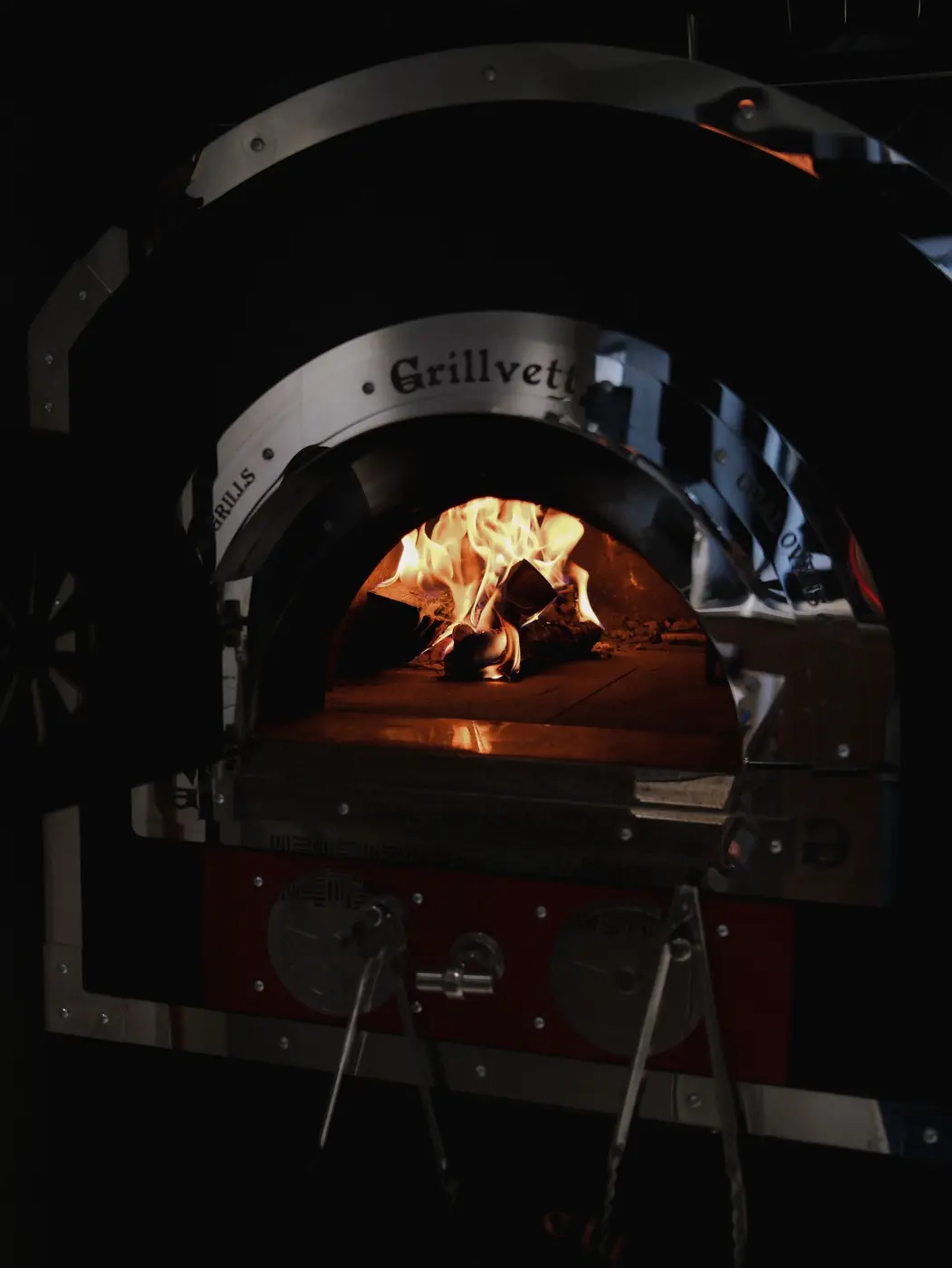
This decision gets argued on flavour and decided on logistics. Both matter, and the honest comparison looks different depending on how you actually trade. Here it is without the romance.
Flavour: wood wins, and we will not pretend otherwise
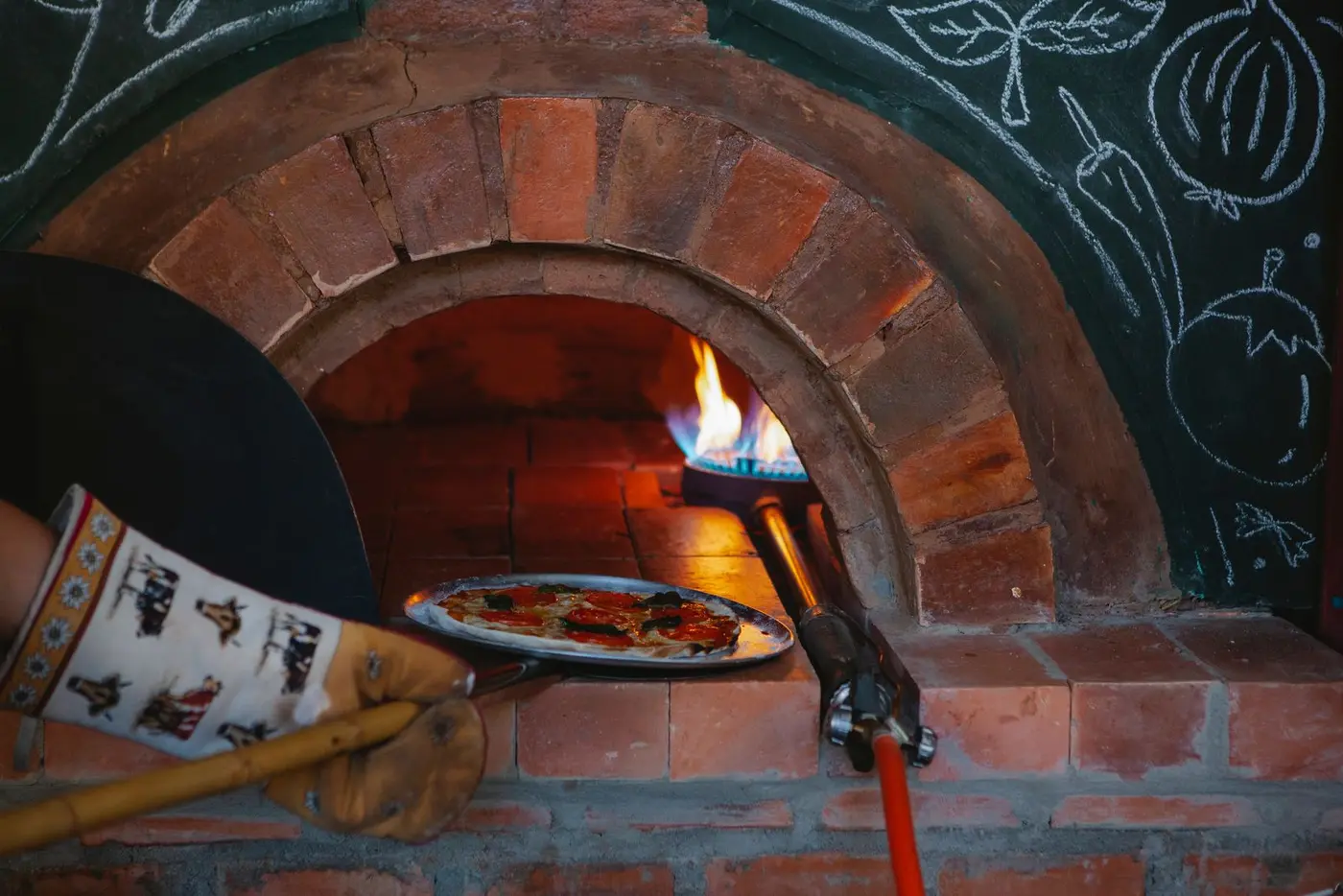
A gas oven gives you the same firebrick floor, the same dome geometry, and the same 60–90 second bake. What it does not give you is smoke. On a simple margherita, where the crust is the product, people who know pizza can taste the difference.
How much that matters depends entirely on your menu and your customer. For a Neapolitan specialist it is the whole proposition. For a hotel serving pizza among twenty other dishes, it rarely registers with the guest and never appears on a review.
Speed and staffing: gas wins clearly
A wood-fired 100 cm dome takes about 90 minutes from cold and needs someone who knows how to build and manage a fire. The gas equivalent takes about 35 minutes and needs someone who can turn a valve.
That difference compounds in real operations. If the person opening is not the person cooking, if shifts rotate, or if you trade long hours, gas removes a dependency on a skill you may not have on every shift. We have seen more ovens underperform because of inconsistent fire management than because of anything structural.
Consistency: gas wins
A wood fire is always either building or burning down. A skilled operator manages that and holds a usable window; a less experienced one produces pizzas that drift through the evening. A gas burner holds a set temperature until you turn it off.
If your product needs to be identical at nine as it was at six, that matters more than most buyers expect.
Extraction: gas is far easier to site
This decides more installations than flavour does. A wood oven needs 200–250 mm of insulated flue to above the roofline. Gas needs 150–180 mm. In a mall unit, an airport concession, or a small café with a difficult roof, that difference is often what makes a brick oven possible at all.
Wood also needs dry, secure fuel storage and produces ash that must be cleared and disposed of — a real constraint in shared service corridors where the route to the bins crosses someone else's operation.
Running cost: closer than people assume
Hardwood is cheaper per unit of heat than LPG across most of Kenya. But wood ovens take longer to reach temperature, so they burn more getting there, and a poorly managed fire wastes a great deal.
For a seven-day operation that keeps the oven warm between days, wood usually comes out ahead. For a site firing from cold three times a week, gas often does. Neither difference is large enough to decide the question on its own — we work through the numbers in what an oven costs to run.
Maintenance
Wood ovens need the flue swept for creosote and produce more soot on the dome, which affects how you read the oven. Gas ovens need an annual burner service, a flame-failure test, and the certification your insurer will ask for. Roughly comparable effort, different in kind. Both are covered by our servicing schedule.
When a hybrid is worth it
A hybrid runs either fuel and switches in minutes. It genuinely solves the case where weekday and weekend service want different things — gas for quiet, thinly staffed shifts where consistency matters; wood when the room is full and the fire is part of what people came for.
It is not worth it if ninety per cent of your service would use one fuel. You would be paying for capability you never touch, and the money would do more work in a better finish or a larger dome. We would rather tell you that at survey than sell it to you.
The decision you must make at build time
Whatever you choose, decide the flue deliberately. Wood needs the larger diameter. If there is any chance you will want wood later, size the flue for wood now and run gas through it in the meantime — a larger flue on a gas oven is a minor inefficiency, easily managed.
The reverse is not true. Retrofitting a 250 mm flue into a building that was piped for 150 mm is expensive, disruptive, and sometimes structurally impossible. This is the single most common regret we encounter, and it costs nothing to avoid at the survey stage.
What about electric?
Electric deck ovens have their place in high-volume, low-skill environments, and they are genuinely easy to run. They are not brick ovens. You do not get the radiant dome heat, you do not get the 90-second bake, and you do not get the thermal mass that carries a bread bake after service. If a deck oven suits your operation, buy one — but buy it knowing it is a different product, not a convenient version of this one.
A short decision rule
- Pizza is your identity and you have skilled staff — wood.
- Long hours, rotating shifts, or difficult extraction — gas.
- Genuinely two different trading patterns across the week — hybrid.
- Undecided — size the flue for wood and start on gas. That keeps every option open at almost no cost.
Talk it through with us at design and consultation before anything is ordered.
A week in two kitchens
Kitchen A is a seven-day pizzeria that never lets the oven go fully cold. On wood, each morning starts from a warm dome and reaches temperature in about 45 minutes on a modest load. Fuel use is lower per trading hour than the headline figures suggest, and the operator has been doing it for three years. Wood is comfortably the right answer.
Kitchen B is a hotel trading breakfast through dinner with three rotas and no dedicated pizza chef. On wood, someone competent has to light and manage a fire from cold every day, and the product varies by whoever is on. On gas the oven comes up during setup and holds until close. Gas is comfortably the right answer, and the flavour argument never comes up because nobody has ever tasted the alternative on that menu.
The oven is identical in both. The trading pattern decides it.
Questions we get asked
"Can we start on gas and add wood later?" Yes, provided the flue was sized for wood at build. That is the whole reason we push the flue decision to the front — the dome converts easily and the extraction does not.
"Does our insurer care?" They care about the flue, the clearances, and evidence of servicing, more than about the fuel. Gas installations need commissioning certification; wood installations need sweeping records. Both are routine if you plan for them and awkward if you do not.
"Is electric worth considering?" Electric deck ovens are genuinely easy to run and have their place in high-volume, low-skill operations. They are not brick ovens — no radiant dome heat, no 90-second bake, no thermal mass to carry a bread bake after service. Buy one knowing it is a different product, not a convenient version of this one.
"What about charcoal?" Workable but awkward. It burns hot without the flame that heats the dome, so you get floor heat without the roof heat that cooks the top. Fine as a supplement to wood; poor as the primary fuel.