Running Your Oven
Choosing Firewood for a Pizza Oven in Kenya
Which Kenyan hardwoods work, what seasoning actually means, how to store wood through the rains, and what must never go into an oven you cook on.
Fuel is the input you buy most often and think about least. It also has more effect on how your oven performs than almost anything except the build itself.
Wet wood roughly doubles consumption, sooties the dome, loads the flue with creosote, and produces a fire that will not hold temperature. Dry hardwood does none of those things. The difference is entirely under your control.
What "seasoned" actually means
Freshly cut wood is around half water by weight. Before that water becomes heat you can cook with, it has to be boiled off — using energy that should have gone into your dome.
Seasoned wood is below roughly 20% moisture. In Kenyan conditions that means split and stacked under cover with airflow for six to twelve months depending on species and altitude. Highland sites take longer; the coast is faster but humidity works against you.
A cheap moisture meter settles the argument in seconds and pays for itself quickly.
How to tell without a meter
- Weight. Seasoned wood is noticeably lighter than it looks.
- Sound. Two dry pieces knocked together ring; wet ones thud.
- Ends. Radial cracks in the end grain indicate drying.
- Bark. Loose or falling off on many species.
- In the fire. Hissing, bubbling at the ends, or a fire that struggles to establish means water.
Species that work in Kenya
You want dense hardwood — it burns hotter, longer, and cleaner than softwood.
- Grevillea — widely available, seasons reasonably quickly, burns well. The practical default across much of the country.
- Acacia — dense, excellent heat, long burn. Season it properly; it is hard work when wet.
- Eucalyptus — plentiful and burns hot, but needs genuinely thorough seasoning and can be resinous when under-dried.
- Olive and other dense indigenous hardwoods — excellent where sustainably and legally sourced. Check provenance rather than assuming.
Sourcing matters beyond performance. Charcoal and firewood supply chains in the region include illegally harvested indigenous timber, and a restaurant is a visible business. Buy from a supplier who can tell you where it came from.
What never goes in
- Treated or painted timber. Puts arsenic, chromium, and other contaminants into a surface you cook on. Never, under any circumstances.
- Plywood, chipboard, MDF. Glues and resins. Same reason.
- Pallets unless you are certain they are heat-treated rather than chemically treated, and free of paint and oil.
- Softwood — pine, cypress. Not toxic, but resinous. It sooties the dome, burns fast without much heat, and accelerates creosote in the flue. Acceptable as kindling; not as fuel.
- Anything damp, mouldy, or rotten. Poor heat, bad smoke, and mould spores you do not want near food.
Sizing your splits
Split rather than round. Split wood has more exposed surface, dries faster in storage, and catches more readily.
For most ovens, pieces roughly 5–8 cm across and 30–40 cm long are ideal — long enough to burn steadily, small enough to feed a controlled fire. Keep a proportion of smaller splits for establishing the fire and for holding temperature during service, where you want small regular additions rather than occasional large ones.
Storing wood through the rains
This is where Kenyan operations most often come unstuck. Wood that was seasoned in August is useless in November if it has been sitting in the open.
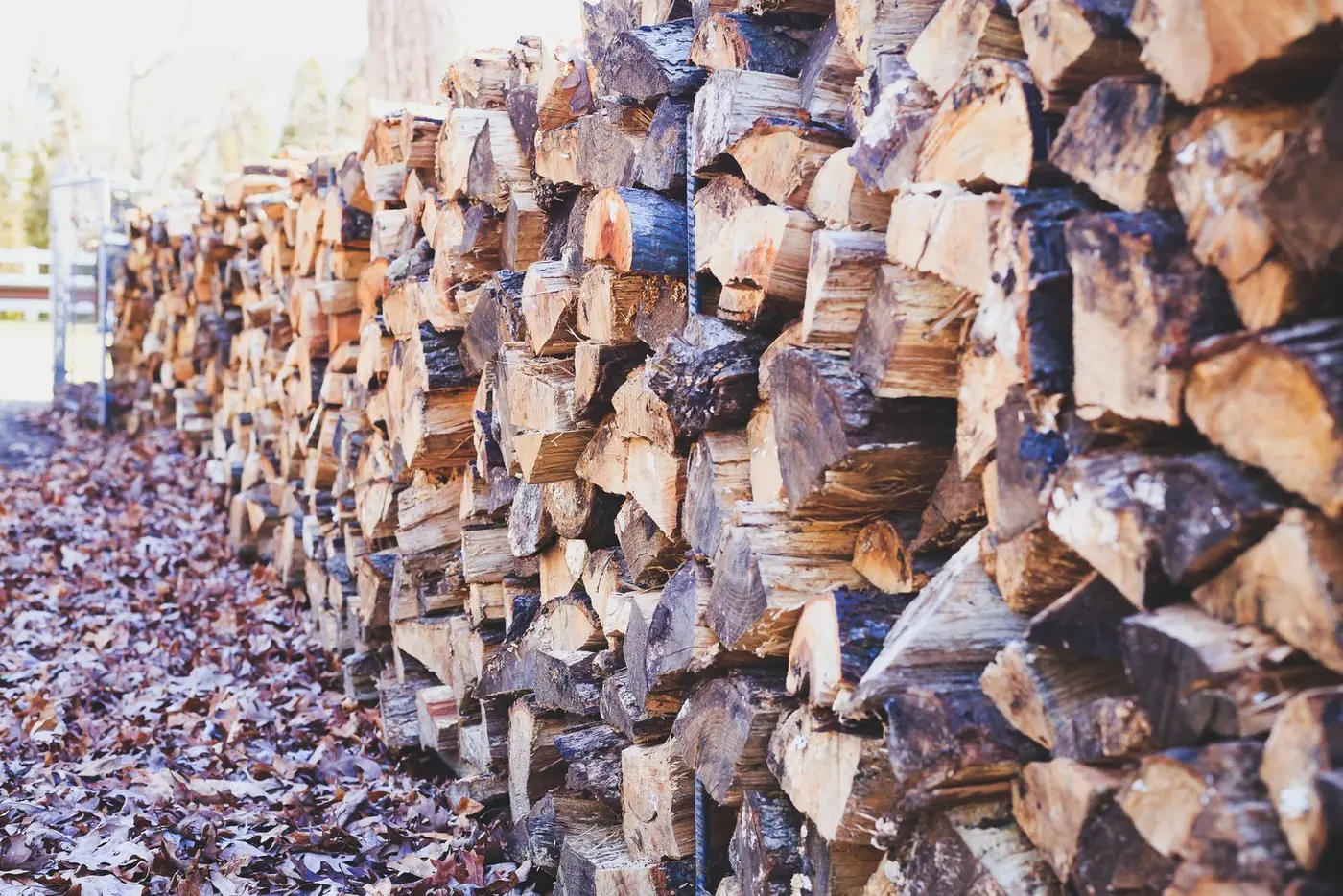
- Cover the top, leave the sides open. Rain off, airflow through. A tarpaulin wrapped around the whole stack traps moisture and grows mould.
- Get it off the ground. Pallets or battens. Ground contact wicks moisture straight back in.
- Keep a week's worth inside. Near the oven, genuinely dry, so a wet morning does not force you to burn damp wood.
- Rotate stock. Oldest first, or you will accumulate a pile that never gets used and eventually rots.
Where the wood store goes is worth planning at build time — see siting your oven.
How much to buy
A 100 cm oven in six-day service uses roughly 250 kg a week. Working figures by oven size are in running costs.
Buy ahead. Wood bought seasoned costs more than wood you season yourself, and the price of both rises when everyone wants it. Somewhere to store two or three months' supply pays for itself.
If you cannot source good wood reliably
Be honest about it at the buying stage. If dry hardwood is genuinely hard to get where you are, that is a serious argument for a gas oven or a hybrid, and we would rather you knew before the build than after.
An oven run on bad wood underperforms permanently, and no amount of technique compensates. The comparison is in wood-fired or gas.
Building a wood store that works
The specification is simple and routinely got wrong:
- Roof, no walls. Or walls with substantial gaps. Rain off, air through.
- Off the ground by at least 100 mm on pallets or battens. Ground contact wicks moisture straight back in.
- Single-row depth if possible, or stacked so air can move between rows. A deep solid block dries only on the outside.
- Sited where prevailing wind reaches it, not tucked against a building in still air.
Size it for two to three months of use plus whatever you are seasoning. For a 100 cm oven in six-day service that is a substantial structure — roughly a tonne a month — and it is worth designing at the same time as the oven rather than improvising later.
Buying: what to ask
Ask when it was cut, not whether it is dry. "Dry" from a supplier means it has been outside; seasoned means six to twelve months split and stacked under cover. Those are different things and only one of them burns properly.
Ask what species. A mixed load of unknown timber is a gamble on both heat output and what has been treated.
Ask where it came from. Indigenous hardwood harvested illegally moves through the same supply chains as legitimate fuel, and a restaurant is a visible business with a reputation to lose.
Seasoning your own
If you have space, buying green and seasoning yourself is considerably cheaper. Split it on arrival — round logs dry very slowly — stack it properly, and label the month. Rotate strictly oldest-first or you will accumulate a pile at the back that eventually rots.
Six months is a realistic minimum for most Kenyan hardwood split to oven size, twelve for dense species or high-humidity sites.
Kindling and fire-starting
Keep a separate dry supply of small kindling. Softwood is genuinely useful here — it catches fast — even though it is poor as primary fuel. Avoid paraffin, firelighters with strong odour, or anything that will leave residue in a chamber you cook in.