Buying Guides
Commercial vs Domestic Pizza Ovens: What Actually Differs
It is not simply size. Mass, recovery rate, mouth width, flue sizing and duty cycle all change — and a domestic oven pressed into commercial service fails in a predictable way.
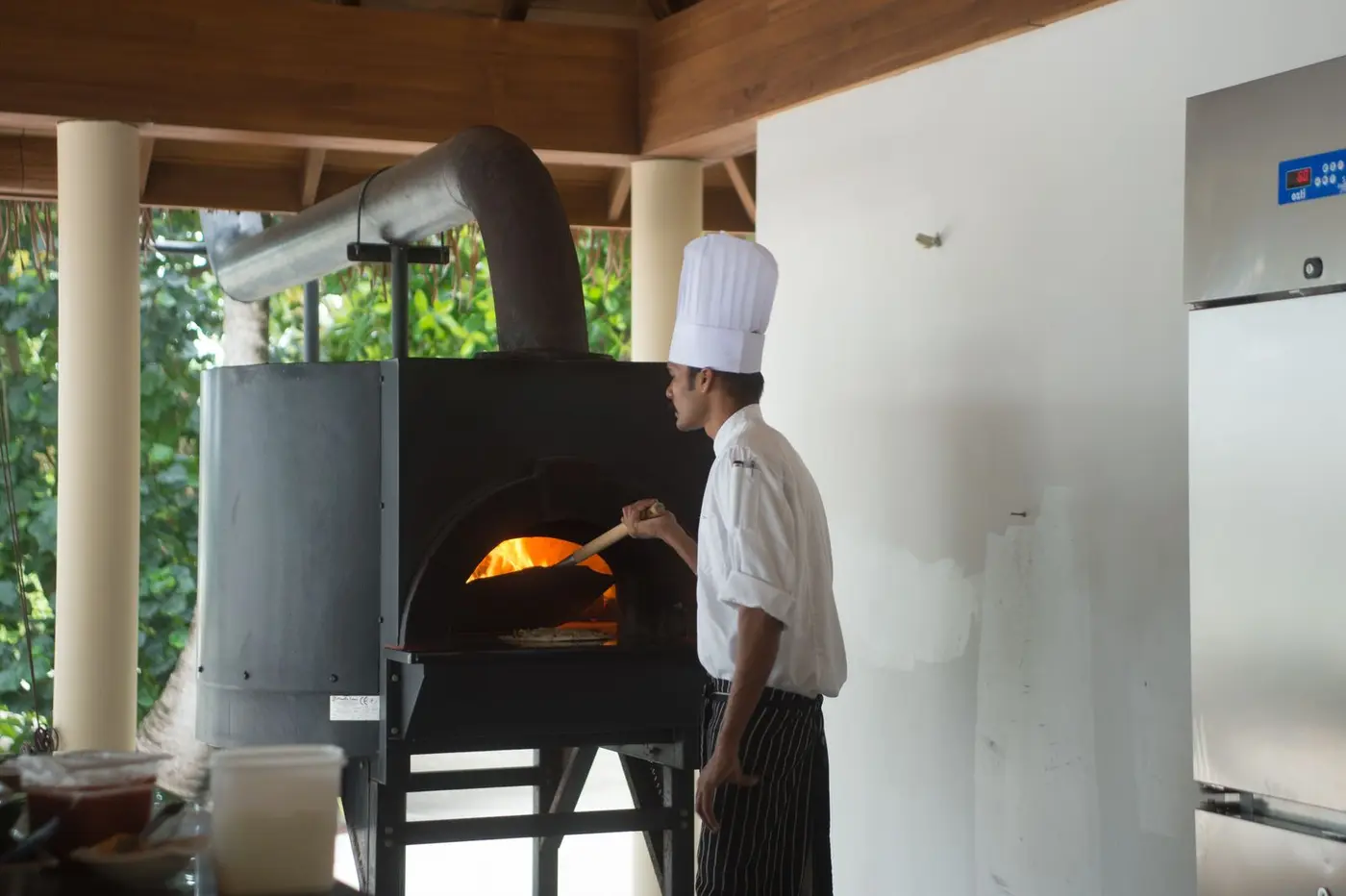
People often assume a commercial oven is just a bigger domestic one. It is not, and the difference matters most to the buyer trying to save money by installing a garden oven in a restaurant.
That specific decision fails predictably, so it is worth understanding what actually changes.
Duty cycle is the real distinction
A domestic oven is fired from cold, cooks for an afternoon, and then sits for a week or two. A commercial oven may be held at temperature for twelve hours a day, six or seven days a week, for years.
Everything else follows from that. The commercial build is not designed to be bigger; it is designed to be run constantly without degrading.
Thermal mass and recovery
The critical commercial property is recovery — how fast the floor returns to temperature after a cold pizza base is launched onto it. A domestic oven with three pizzas on the floor loses temperature and takes its time coming back. Nobody notices on a Saturday afternoon.
Put that oven into a Friday service and the failure is obvious: the first few pizzas are excellent, and by the twentieth the floor has sagged and bake times have drifted out to three minutes. The kitchen compensates by waiting, service backs up, and the oven gets blamed for something it was never built to do.
Commercial builds carry more hearth mass specifically so the floor holds through sustained loading. Our sizing guide works through the throughput arithmetic.
Mouth width
An underrated difference. A domestic mouth is sized for one person working unhurried. A commercial mouth has to let an operator launch, turn, and retrieve quickly — and on larger ovens, two people work the same mouth without colliding.
Too narrow a mouth caps throughput regardless of how much floor sits behind it. It is also the hardest thing to change afterwards.
Flue sizing
Commercial ovens run bigger fires for longer, which means more combustion gas and a larger flue. A domestic 180 mm flue on an oven being run commercially will not draw adequately, and the result is smoke rolling out of the mouth into the kitchen during your busiest hour.
This is a safety and compliance matter as much as a comfort one. See flue and siting.
Hearth wear
A domestic hearth might see a few hundred peel movements a year. A commercial hearth sees that in a week. The brick specification and the decision to lay it dry rather than mortared both matter far more in commercial service, because you will be replacing tiles at some point and you want that to be a morning's work rather than a rebuild.
Finish and cleaning
Commercial kitchens have hygiene requirements and get cleaned aggressively. Finishes that suit a garden — soft renders, porous stone — do not survive that. Commercial builds tend toward rendered-and-sealed or stainless cladding for exactly this reason.
Where the two overlap
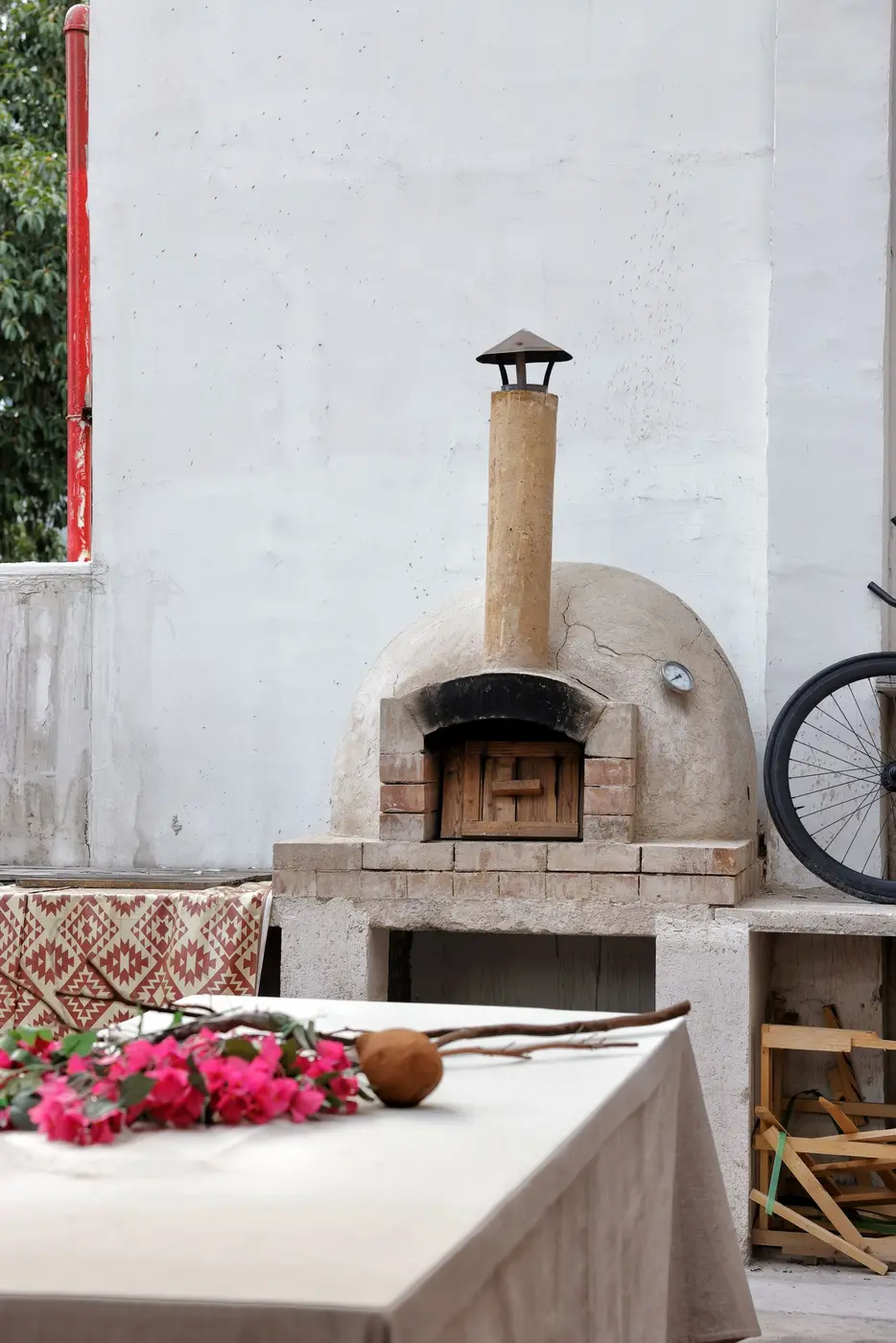
The distinction is not absolute. A 90 cm garden oven is genuinely adequate for a small private event business doing thirty covers occasionally. A 100 cm dome serves both a serious home cook and a working pizzeria, which is why it is our most-specified build.
The failure mode is specific: buying at the domestic end of the range and then running a commercial duty cycle on it. That is what breaks ovens and disappoints owners.
What it costs to get this wrong
An undersized oven in commercial service does not fail dramatically. It just underperforms constantly — slower service at peak, inconsistent product, more fuel per pizza, and a hearth that wears out years early. By the time it is obviously wrong, you have built a kitchen around it.
Replacing it later costs more than specifying correctly at the start, because you are now also paying for downtime and for removing the first oven.
Buying domestic on purpose
None of this argues against domestic ovens. For a home, a 90 cm dome is the right answer and a commercial build would be a waste — more mass to heat, longer to reach temperature, more fuel for a Saturday afternoon that a smaller oven handles comfortably.
Buy for the duty cycle you actually have. If that is weekends and family, buy domestic and enjoy it. If it is service, buy for service.
How we specify
At survey we ask how many hours a week the oven will be hot, not just how many pizzas it will cook. Those are different questions and the second one alone will mislead you.
Tell us your trading pattern through our design and consultation service and we will specify against it — including telling you when the smaller, cheaper oven is genuinely sufficient.
A worked example: the 90 cm in a pizzeria
We were asked to look at a 90 cm garden oven that a new restaurant had installed to save money. The complaint was that pizzas were inconsistent after the first half hour of service.
Nothing was wrong with the oven. It was well built and performing exactly to specification. The problem was arithmetic: three pizzas on the floor at a time, a hearth sized for occasional domestic use, and a Friday peak of sixty covers. By the twentieth pizza the floor had dropped forty degrees and was not recovering between launches, so bake times stretched and bases went pale.
There was no fix short of replacing it. The oven now lives at the owner's home, where it is excellent, and a 110 cm dome went into the restaurant. The saving on the first oven cost roughly double by the time it was resolved.
Buying up the range without overbuying
The honest middle ground for a small restaurant that expects to grow is a 100 cm commercial build rather than either extreme. It handles 40 to 50 an hour, reaches temperature in 90 minutes, and has the hearth mass to hold through a genuine service.
Where you should plan ahead rather than buy ahead is the flue and the footprint. Size the extraction and leave the space for the oven you might eventually want. Those are the expensive things to change; the dome itself is comparatively straightforward to rebuild in five years if trade justifies it.
The questions we ask at survey
How many hours a week will the oven be hot? How many people will work it, and are they the same people each week? What is the busiest single hour you have to serve? Is the menu pizza-led or is pizza one item among many?
Those four answers determine commercial or domestic far more reliably than a cover count, and they are the reason we survey rather than quote from a phone call.